Three Nurses Came to My Clinic the Same Week. All Three Were About to Quit. None of Them Needed To.

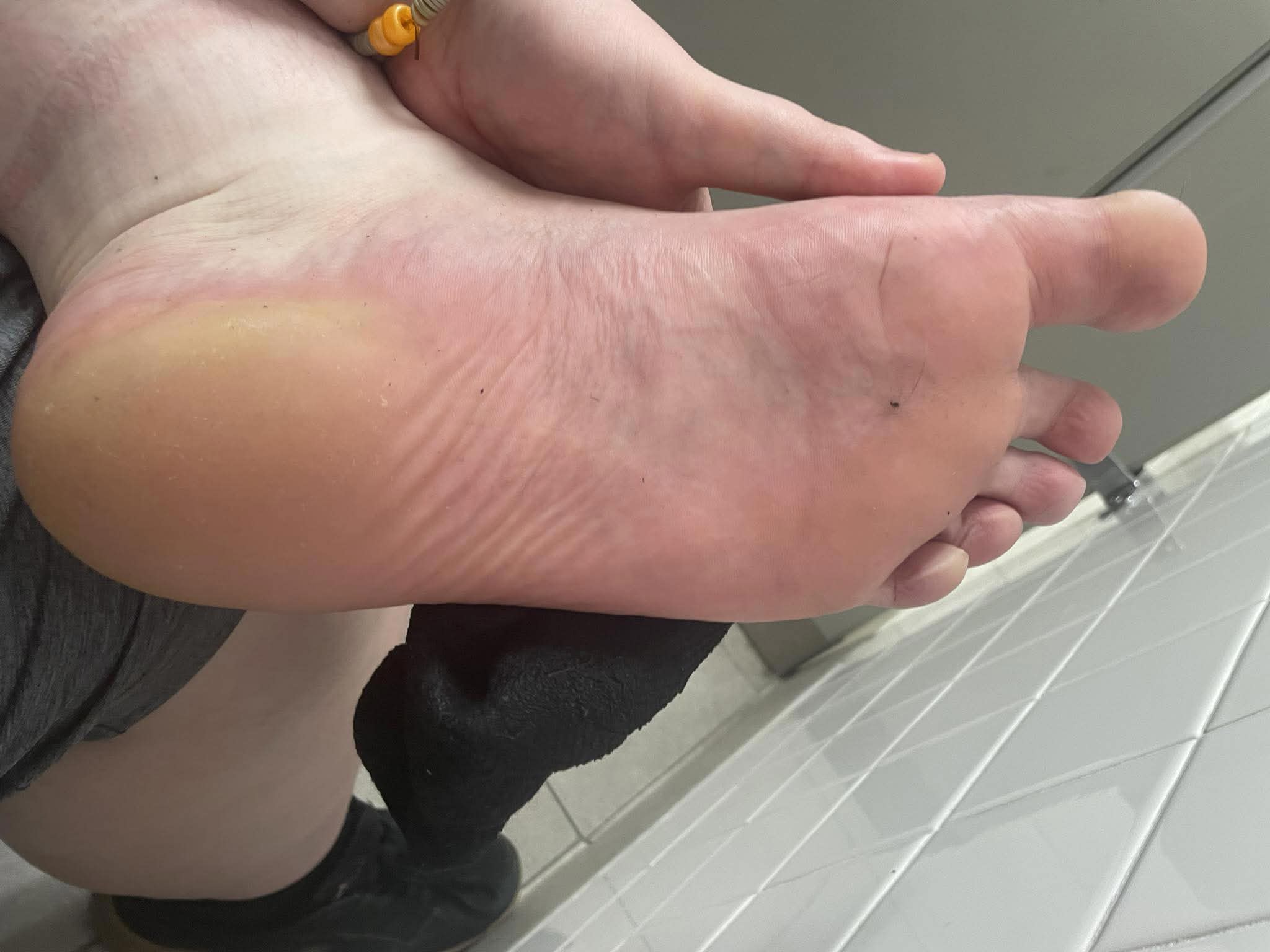
I've treated thousands of workers over my career. But in the last five years, something changed. I started seeing more nurses than anyone else. Week after week.
And they weren't coming in with unusual conditions. They were coming in defeated. Convinced their bodies were giving out. Many looking for desk jobs, anything to get them off their feet.
One week last year made me realize how serious this had become. Three nurses. Monday, Wednesday, Friday. Different hospitals. Same story.
All three were considering leaving bedside care.
All three believed the pain was just part of the job. That their bodies couldn't handle it. That they'd tried everything and nothing worked.
All three were wrong about what was causing it. And I could prove it in under two minutes.
The Most Medically Literate Patients Who Are Completely Wrong About Their Own Feet
Here's what makes treating nurses different.
They understand anatomy. They know what plantar fasciitis is. They can describe their symptoms with clinical precision. They've already tried half the treatment options and ruled out the other half.
They come in convinced they know the problem. Flat feet. Overpronation. Age. Weight. Hospital floors.
And almost every time, they're wrong.
Because the thing destroying their feet isn't something they learned in nursing school. It isn't in any medical literature. And it's invisible to the naked eye.
I've examined hundreds of nurses with chronic foot pain. The vast majority had nothing wrong with their feet at all.
What was wrong was the equipment between their feet and the floor.
"I've Tried Everything"
That's the sentence I hear more from nurses than any other profession. And they mean it. Their solution graveyard is longer than anyone else's because they're resourceful and desperate.
They've cycled through Hokas, Brooks, Danskos, ASICS, New Balance, Skechers, Crocs. Replaced them every four to six months. Bought gel inserts, foam inserts, and custom orthotics from pharmacy brands to $800 podiatrist-fitted pairs. Worn compression socks every shift. Soaked their feet in Epsom salt every night. Rolled frozen water bottles under their arches. Taken 800mg ibuprofen every eight hours like it was part of their medication pass. Some have had cortisone injections that lasted a few months before the pain crawled back.
And through all of it, nobody pointed them toward the one thing that was actually failing.
What Two Minutes and a Caliper Revealed
When those three nurses came to my clinic, I did something I now do with every healthcare worker.
I asked them to bring their work shoes.
I removed the insoles. Hokas. Brooks. New Balance. All between three and six months old. I pressed the heel area. The foam compressed. Released slowly. But not all the way.
I measured the thickness and compared it to factory specifications.
compression loss
compression loss
compression loss
Permanently compressed. The cushioning that was supposed to protect them on hospital terrazzo had been dead for months. These nurses had been walking on hard floors with almost nothing between their heels and the ground.
The shoes looked fine on the outside. The insoles felt okay when pressed with your finger. But under a 12-hour shift, they had nothing left to give.
That hidden compression is what I call Collapse Fatigue. Once I understood it, everything about nursing foot pain made sense.

Why Nursing Destroys Insoles Faster Than Almost Any Other Job
Nurses walk an average of eight miles per shift on polished concrete, terrazzo, and sealed tile. These surfaces are engineered for hygiene, not for the human body standing on them for 12 hours.
Standard insoles, even in premium shoes, use foam or gel designed for moderate daily use. Under hospital conditions, that material crushes flat and never recovers. Within weeks, the insole has lost a significant percentage of its cushioning. The nurse can't see it. Only feels it at hour eight, hour ten, hour twelve.
Once the cushioning is gone, the body pays:
This is why new shoes provide temporary relief. Fresh insoles feel great for weeks. Then they collapse. The cycle restarts.
It was never about finding the right shoe brand. It was always about the insole inside it failing under conditions it was never built for.
What I Found When I Went Looking for the Answer
After identifying Collapse Fatigue, I had a new problem. I couldn't just tell my patients to buy better insoles. Everything on the market used the same low-density foams and gels that were collapsing in the first place.
I needed something engineered to resist permanent compression under sustained loads. Not softer foam. Not thicker gel. A fundamentally different approach.
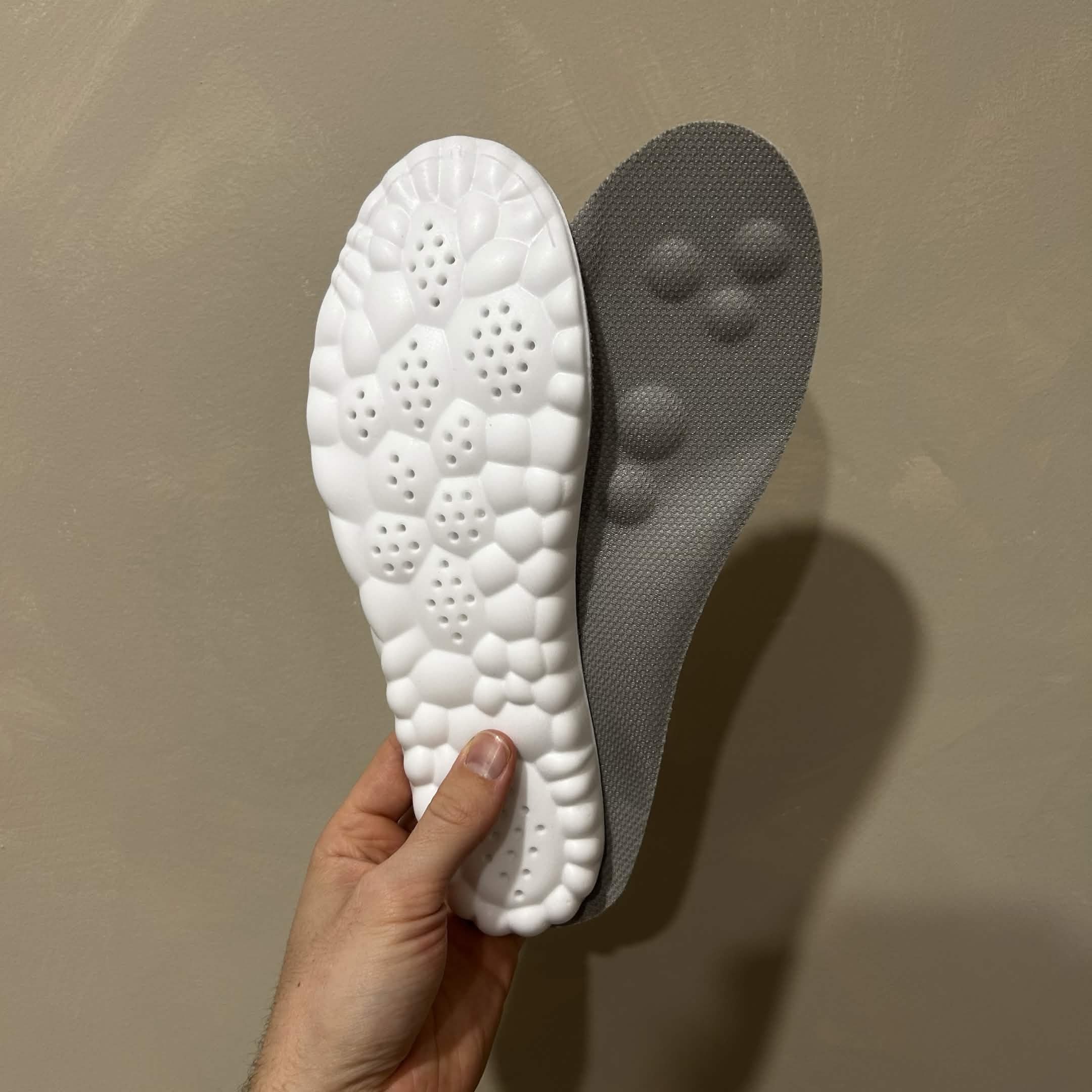
That search is how I found SoleBrace® and their WorkFit™ system.
What caught my attention wasn't marketing. It was the engineering. Four layers, each solving a specific failure point I'd been documenting:
I was skeptical. So I tested them myself.
I tested them across 150 workers in demanding professions. All with chronic foot pain. All had tried multiple solutions.
After 90 days:
That's when I started recommending them to every nurse in my practice. My own daughter is a hospital nurse. She wears them every shift. I wouldn't let her wear anything else.
The Three Nurses Who Almost Quit
I gave each of those three nurses a pair of WorkFit insoles and asked them to wear them through their next full rotation before making any career decisions.
All three are still on the floor.
One told me she stopped reaching for ibuprofen within the first two weeks. Another said she went for a walk on her day off for the first time in months. Not because she had to. Because she wanted to. The third sent a message after her first week back: "I forgot what it felt like to get out of my car without wincing."
These aren't dramatic transformations. They're what normal is supposed to feel like. And normal had been stolen from them by insoles that quietly failed months ago.
The Hokas were fine. The Brooks were fine. The Danskos were fine. The shoes were never the problem.
What Happens If You Wait
I've been doing this for 17 years. I know what happens when nurses push through Collapse Fatigue without addressing it. The fat pad keeps thinning. The fascia keeps tearing. The pain spreads from feet to knees to hips to lower back. What starts as soreness at hour eight becomes a condition that follows you home, keeps you up at night, and eventually forces a career decision you shouldn't have to make.
I've watched 26-year-old nurses ask me if they can do this for another 20 years. I've watched 40-year-old nurses leave patient care because their body gave out. Almost every case traced back to the same invisible starting point. Collapsed insoles. Months of unprotected impact. A problem that doesn't cost much to prevent and thousands to treat once it progresses.
If you're a nurse whose feet are getting worse, spending days off recovering instead of living, or quietly wondering how much longer you can do this, you're probably dealing with Collapse Fatigue.
You don't need another pair of shoes. You need insoles that won't collapse inside them.
SoleBrace is currently offering free shipping and a 30-Day Money Back Guarantee. Wear them on your actual shifts. If your feet don't feel the difference, send them back for a full refund. No questions.
CLICK HERE to Try WorkFit™ Insoles Risk-Free →127 workers in that trial discovered their feet weren't the problem. Their insoles were.
Time to find out if yours are too.
Try it today with a 30-Day Money Back Guarantee!